Enemies of the Harvest
The Enemy Comes at Harvest Time
There are seasons when the intensity of the attack is not proof that you are failing; sometimes, the attack is proof that something is growing.
In Judges 6, we find Israel oppressed by Midian for seven long years. They were hiding in dens, caves, and strongholds—living far beneath their covenant privilege. They had land, but no liberty; seed, but no security; fields, but no freedom to enjoy the fruit.
Judges 6:3 (NKJV) > “So it was, whenever Israel had sown, Midianites would come up…”
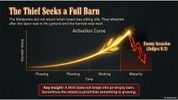
Notice the precision of the enemy's timing: the Midianites did not show up when Israel was sitting idle. They came whenever Israel had sown. That means there was already labor in the ground, investment in the field, and expectation in the soil. The people had worked, planted, watered, waited, and watched—and right when the harvest was within reach, the enemy invaded.
This remains one of the enemy’s chief strategies. As John 10:10 reminds us, the thief only comes to steal, kill, and destroy. But understand this: a thief does not break into an empty barn. A thief only targets a place of value, looking for something worth taking. We see this immediately in the Parable of the Sower—the seed is good, the sower is active, the field has potential, but Satan comes at once to take away the Word sown in their hearts.
The Core Danger: Inside Enemies.
But we must look deeper than the Devil. Not every harvest is destroyed by an outside invader; some harvests are lost to internal enemies. Notice that "Devil" is not among the points today, because the devil is not our main issue.
Sometimes it is not Midian in the field; it is Baal in the backyard. Sometimes it is not the devil at the door; it is the idol in the house. Sometimes it is not the enemy destroying the crop; it is our own attitude setting fire to the barn. God has appointed a harvest and assigned a due season, but we must ruthlessly identify the internal enemies that threaten it.
1. Disposition: The Hardened Ground and the Controlled Spirit.
The first enemy of the harvest is our disposition—our inner attitude, emotional posture, temperament, and the spirit we carry into life.
In Mark 4:16-17, Jesus speaks of the seed sown on stony ground. These are people who receive the Word with immediate joy, but because they have no real root in themselves, they endure only for a little while. The moment trouble or persecution arises on account of the Word, they are immediately offended and fall away. The stony soil represents a heart that has been walked on, pressed down, and hardened. The seed sits on the surface, unable to penetrate, until the sun devours it. Their disposition has become unreceptive.
A person can have good seed in the ground, but still burn down their own harvest through unmanaged anger.
Proverbs 29:22 (NKJV) > “An angry man stirs up strife, and a furious man abounds in transgression.”
James 1:19-20 (AMP) > “...Let every man be quick to hear [a ready listener], slow to speak, slow to take offense and to get angry. For man’s anger does not promote the righteousness God [wishes and requires].”
Human anger can produce intimidation, control, distance, silence, and fear—but it will never produce the righteousness of God.
Chronic Aggravation and the "Self" Problem.
Extreme, chronic aggravation is simply anger wearing a different dress. If you are fighting constant irritation, if everyone around you is constantly making you upset, it is time to check your own heart. My Uncle taught me an old, modified proverb that fits perfectly: “If Herb has a problem with Lou, Herb has a problem with Norm, and Herb has an issue with Russ… Herb is the problem.” If everybody is always irritating you, the irritation isn't just around you—it is within you.
Mature believers do not have to react to everything. Many people are not under a spiritual attack; they are suffering from emotional mismanagement. They are praying for deliverance from the devil, but the devil they need deliverance from is the one they know best: SELF.
-
It’s not discernment; it’s suspicion.
-
It’s not boldness; it’s bitterness.
-
It’s not “being real”; it’s unresolved emotion.
People excuse their sharp tongues by saying, “I just tell it like it is,” but Ephesians 4:15 calls us to speak the truth in love. Truth without love is a weapon; love without truth is weakness, but truth wrapped in love is life.
Like the church at Ephesus, you can have all the truth in the world, but if you lose your love for one another, you've lost your connection to Jesus, and He will remove His light, His oil, and His fire.
The Foothold of Anger.
Ephesians 4:26-27 warns us not to let the sun go down on our wrath, leaving no room or foothold for the devil.
Unresolved anger gives the enemy legal territory to operate. It scorches relationships, families, ministries, and callings. It destroys not just what is currently growing in the field, but it also burns down the barn where past harvests are stored. People lose years of a relationship over moments of rage because they cannot govern their spirits. Yet, Scripture says that ruling your own spirit is greater than conquering a city. You can sing, preach, teach, and give—but if you cannot rule your spirit, your harvest remains completely vulnerable.
Look at Cain in Genesis 4. When his offering was rejected, and his brother's was accepted, his countenance fell, and he became furious. God confronted him before the murder took place, warning him that sin was crouching at his door, waiting to master him. God was saying, "Cain, deal with your anger before your anger deals with your brother."
When we excuse our behavior by saying, "It's just my nature," we are acknowledging our animalistic, carnal nature. We must pray through until His divine nature takes over. Unresolved emotions, bitterness, offense, and venting open doors. (Even mental health experts now warn that venting often sears negative experiences deeper into your memory rather than releasing them) Real release happens in prayer. Once that door is open, the enemy will use your tongue and attitude to murder your brothers and sisters. Some are praying for a bigger harvest when they actually need to pray for a healed spirit, because a larger harvest in the hands of an angry person only gives them more to burn.
Who are you submitted to? Who has spiritual authority in your life? Who can tell you "no" or correct you? Many people want a pastor until correction shows up. They want the spiritual covering, but not the confrontation; the applause, but not the adjustment. But real pastoral care aligns you; it doesn't just affirm you. Hebrews 13:17 commands us to submit to spiritual leaders who watch over our souls. A pastor who can never correct you is not truly pastoring you, and a sheep that cannot be corrected is not truly submitted.
2. Distraction: Choked by Troubles and Pleasure.
The second enemy of the harvest is distraction. The enemy’s chief strategy is to break your focus before the Word can take root.
A. Troubles Can Distract You.
Some people lose their harvest because they let their troubles scream louder than the truth. They get tripped up by affliction, assuming the presence of the Word guaranteed a life free of trouble. But sometimes trouble is present not because the Word failed, but because the Word is actively working.
Psalm 126:5-6 (NLT) > “Those who plant in tears will harvest with shouts of joy. They weep as they go to plant their seed, but they sing as they return with the harvest.”
Tears do not cancel the seed; pressure does not cancel the promise; pain does not cancel the harvest. You can sow in tears and still reap in joy.
B. Entertainment Can Distract You.
Distraction is not always born of trouble; sometimes it is born of pleasure. Not everything that distracts you is inherently sinful. Many things are lawful, but they become lethal when they choke out your spiritual life. Just because you can do it doesn't mean it helps you harvest. Entertainment and pleasure must be put in their proper place and kept there. They become enemies when they numb your conviction, consume your time, weaken your discipline, and turn your heart away from eternal realities.
We must run our entertainment through strict spiritual filters:
-
Did it cause me to lust?
-
Did my spirit agree with it?
-
Does it allow me to maintain inward and outward holiness?
-
Did it alter my values, or come between God and me?
-
Has it caused my family or friends to fail?
-
Has it changed my heart, and is it more of a friend to me than God is?
Paul warned Timothy that in the last days, men would be lovers of pleasure (Phileo-Hedone) more than lovers of God (Phileo-Theos). This means "Friend of Hedonism" more than a "Friend of God"; this calls back reflection upon Abraham, who was a Friend of God, versus Lot, who chose the well-watered plains of Sodom (Pleasure). We are living in an overstimulated, under-rooted generation. Always scrolling, rarely searching; always entertained, rarely edified; always connected, rarely consecrated. Distraction doesn't look like blatant rebellion; it looks like being busy, being tired, or just being entertained. But the result is the same: the seed is stolen.
C. Missing the Window of Cultivation.
A farmer cannot afford to be careless when the harvest window opens. Proverbs 10:5 says that he who sleeps during the harvest causes shame. There are areas in life where you cannot afford to sleep: you cannot sleep through conviction, through your calling, through your children's formative years, through a marriage needing attention, or through a move of God.
Distraction always whispers, "There will be time later," but harvest seasons have firm expiration dates. Jeremiah 8:20 records the tragic cry: “The harvest is past, the summer has ended... yet we are not saved!”
The enemy doesn’t have to make you deny God if he can just keep you too busy for Him. He doesn't need you to quit church if he can ensure your heart is completely absent while your body is sitting in the pew.
3. Deification: Backyard Baals and Private Idols.
The third enemy of the harvest is deification—idolatry. In Gideon’s era, Israel didn't just have a sudden Midian problem; they had a Midian problem because they first had a Baal problem. They did evil in the sight of the Lord, so He delivered them into the hands of Midian. Midian was not the root cause; Midian was the spiritual consequence.
Before Gideon could ever defeat Midian in public, God commanded him to tear down the altar of Baal in private.
Judges 6:25 (NKJV) > “...tear down the altar of Baal that your father has, and cut down the wooden image that is beside it...”
This was not a foreign idol in a distant pagan temple; this was Baal at home. These were backyard Baals. An idol is anything that receives the trust, affection, obedience, identity, or worship that belongs exclusively to God. As Ezekiel 14 warns, an idol lives internally in the heart long before it is ever built externally.
A backyard Baal can be your career, comfort, control, money, image, family approval, relationships, political identity, personal preferences, or a secret sin. Anything you cannot obey God without first checking with has become an idol. Anything that can induce you to disobey God has become an active altar.
Private Consecration Before Public Victory.
God will always confront your private altar before He gives you a public battle. He does not merely want to defeat your oppressors; He wants to purify your worship. Exodus 20:3 says, "You shall have no other gods before Me." That phrase "before Me" literally means in My presence or in My face. God is not content being first on a list of many; He demands to be the only God in your sight. Jesus stated clearly in Matthew 6:24, "No man can serve two masters." He didn't say we shouldn't; He said we cannot. Divided worship produces a weakened harvest.
Notice that God didn’t just tell Gideon to tear the altar down; He told him to take his father's second bull, build a proper altar to the Lord, use the wood of the smashed idol for fuel, and offer a burnt sacrifice. God was saying, "I don't just want you breaking down the wrong things; I want a public demonstration that I am now primary."
Inherited Altars
Scripture notes that this altar belonged to Gideon’s father, meaning Gideon had to confront a systemic pattern older than himself. Some idols are generational—attitudes, addictions, prejudices, and dysfunctions that were deeply embedded in the family system before you even had language for them. But when God raises a Gideon, He starts by saying, "Go home and tear down what your family has tolerated."
The enemy in your field is often empowered by the idol in your yard. We cannot expect God to save our harvest while we protect the altars that offend Him.
The Apostle John chose to close his first epistle with these final chronological words: “Little children, keep yourselves from idols. Amen.” (1 John 5:21). It is the ultimate warning to the church, and our greatest backyard Baal is the idol of SELF.
4. Dependency: When Consumers Outnumber Contributors
The fourth enemy of the harvest is dependency. Let's be clear: this is not about legitimate, systemic need. Scripture is fiercely compassionate toward the hurting, the widow, the orphan, and the weak. Galatians 6:2 commands us to bear one another's burdens.
However, Scripture also explicitly warns against a parasitic spirit that only takes and never gives, only consumes and never contributes, and completely evades personal responsibility. Acts 20:35 tells us it is more blessed to give than to receive, but a robust harvest culture cannot be sustained by consumer Christians.
The Church is a Storehouse, Not a Store.
Too many believers treat the local church like a commercial retail store: Feed me, serve me, call me, visit me, sing what I like, preach what I prefer, and meet my needs. But God designed the church to be a body and a storehouse. 1 Corinthians 12:18 says God sets members in the body as it pleases Him. Members are not consumers; they are contributors. The hand, the foot, the eye, the ear—every single part has a function and must do its share.
When too many people demand more than they contribute, the laborers become exhausted, the field is neglected, and the burden crashes down on a select few.
The Danger of Perpetual Immaturity.
Hebrews 5:12 rebukes believers who, by the timeline of their faith, ought to be teachers, yet they still require someone to teach them the basic principles of God all over again. They still need milk when they should be eating solid food. There is a short season to be carried, but there must come a season where you carry others. There is a season to be fed, and a season to feed.
2 Timothy 2:2 outlines the true apostolic kingdom model: Paul taught Timothy, Timothy taught faithful people, and those faithful people taught others. It is contributor multiplication, and consumer dependency breaks that chain entirely.
When did our kingdom sacrifice and service become something we post, Insta, or whine about on social media just to gain accolades, attention, and sympathy?
Jesus said to take up your cross and follow Him—not take up your cross and Facebook about it. People gave their lives unto blood for this Gospel, and we are acting like we need an award just because we successfully pulled off a church event. God help the American Church. The barn is never filled by consumers; it is filled by raw sowers, reapers, servants, and stewards.
5. Doldrums: The Stagnation of Routine
The fifth enemy of the harvest is the doldrums—a state of stagnation, lifelessness, and complete lack of movement. Spiritually, this is when people maintain the routine but lose the fire. They still attend, but they aren't engaged; they still sing, but they aren't worshiping; they still give, but there is no joy; they have form, but absolutely no fire.
Lips Without Hearts.
God completely rejects worship that is reduced to robotic ritual. Isaiah 29:13 and Matthew 15:8 record God’s indictment: “These people draw near to Me with their mouth, and honor Me with their lips, but their heart is far from Me.” It is dangerously easy to voice the correct words while harboring a wandering, detached heart.
This lukewarmness makes God sick. The Laodicean church looked wealthy, self-satisfied, and perfectly religious on the outside. They claimed they needed nothing, yet Jesus diagnosed them as wretched, miserable, poor, blind, and naked. They suffered from a wildly inaccurate self-assessment. That is what the doldrums do: they dull your spiritual senses until you assume you are fine simply because you are still functioning.
Inferior Offerings.
In Malachi 1:8, the priests were still bringing sacrifices, but they were bringing blind, lame, and sick animals—giving God leftovers that they wouldn't dare present to their local governor. The danger of the doldrums is that we start giving God our leftover energy, leftover time, and leftover devotion, while still expecting first-fruit blessings.
Hosea 10:12 commands us: “Break up your uncultivated ground, for it is time to seek the Lord...” To "break up" means to plow up or completely burn up ground that has massive potential but has been left completely idle. Many hearts in the church are not barren; they are just unbroken. They have been hardened by life, strife, pain, and grief. Your life isn't fruitless because God left; it's fruitless because the ground has gone uncultivated.
6. Dissension: When Strife Scatters the Harvest.
The sixth enemy of the harvest is dissension—division, faction, and internal conflict that systematically tears apart what God is building. Proverbs 6 lists seven things that God hates, and the climax of that list is “he that soweth discord among brethren.” Notice the agricultural language: discord is a seed. Some people sow faith, unity, and peace; others sow suspicion, gossip, comparison, and division. And by the unshakeable law of the harvest, whatever you sow will grow.
Strife Devours the Field
Galatians 5:15 issues a stark warning: “But if you bite and devour one another [in partisan strife], be careful that you [and your whole fellowship] are not consumed by one another.” This is violent imagery. Paul is warning that if we continue the internal civil war, there will be nothing left of the house. Many harvests are lost not because the devil defeated the church, but because the church devoured itself. When the strategic energy that should be spent reaping the harvest is wasted on fighting one another, the field suffers.
In 1 Corinthians 3:3, Paul tells the believers they are carnal because envy, strife, and divisions are running rampant among them. And what were they fighting over? Sectarianism—debating which dynamic leader they followed. It was completely frivolous and toxic. They were highly gifted, but incredibly carnal; they had spiritual manifestations, but absolute relational dysfunction. Let this be a warning: talent does not excuse toxicity, and being anointed does not exempt you from correction. Paul redirected them by reminding them: “I planted, Apollos watered, but God gave the increase.” Dissension causes us to fight over the human workers while completely ignoring the Lord of the harvest.
This is a realigning Word I spoke to our church recently:
Our vision is simple: Love. Disciple. Serve.
| We Are NOT Here To: | We Are EXPLICITLY Here To: |
|
Build buildings for ego |
Build people and disciples |
|
Gather shallow crowds |
Build commitment |
|
Overload church calendars |
Produce spiritual maturity |
|
Create religious consumers |
Cultivate kingdom contributors |
|
Preserve historical traditions |
Produce radical transformation |
|
Build human platforms |
Lift up the name of Jesus |
|
Build a mechanical machine |
Build an authentic family |
|
Count attendance as success |
Measure success by who has changed |
Programs are tools, not treasures; buildings are vessels, not victories; money is a resource, not the reason.
People are the purpose. The church exists to reach, restore, raise, and release people.
We must be a united front—one vision, one purpose. False unity is just disguised disunity. Psalm 133 reminds us that where brethren dwell together in unity, the Lord commands the blessing—even life forevermore. Unity is not uniformity. Unity does not mean we are identical, or that we never disagree, but it means we value God’s purpose far more than our personal preferences. If we stay united and locked into our mission, God will continue to add to the church daily those who are being saved.
Guarding the Field
The harvest is far too valuable to leave unguarded. God has seed in the ground, promises in motion, prayers being answered, and increase assigned. He has barns He wants to fill, but we must boldly confront the internal enemies of distraction, deification, disposition, dependency, doldrums, and dissension.
Galatians 6:9 (NKJV)“And let us not grow weary while doing good, for in due season we shall reap if we do not lose heart.”
We cannot afford to grow weary, weak, or faint now—we are far too close to our due season. And "Due Season" is a season of absolute certainty—it is a season of SHALL. Not maybe, not possibly, not accidentally. We SHALL reap, if we faint not. The harvest is coming, but we must guard the field.
center
640x360
https://s3.amazonaws.com/mychurchwebsite/images/c1020/05192026175557_9177fac1b07590c_5000x100.jpeg!_!87476
Slide Show Placeholder Box
When you view the live version of this page, you will see a slide show in place of this box. Double-click on this placeholder box to edit the slide show's properties. To remove this slide show from the page, select this box and hit the delete key.
87476!_!640!_!360!_!c